








Trades Hiring Kit — 17 Construction Job Descriptions
Trouble isn't the job description. Trouble is calling a foreman exempt when he spends the day swinging a hammer, or paying a crew as subcontractors when every test says they're employees.
17 trade job descriptions with the exempt-or-not call already made, plus the interview questions and a scorecard. Everything before they say yes.
Built for a five-person crew and not an HR department.
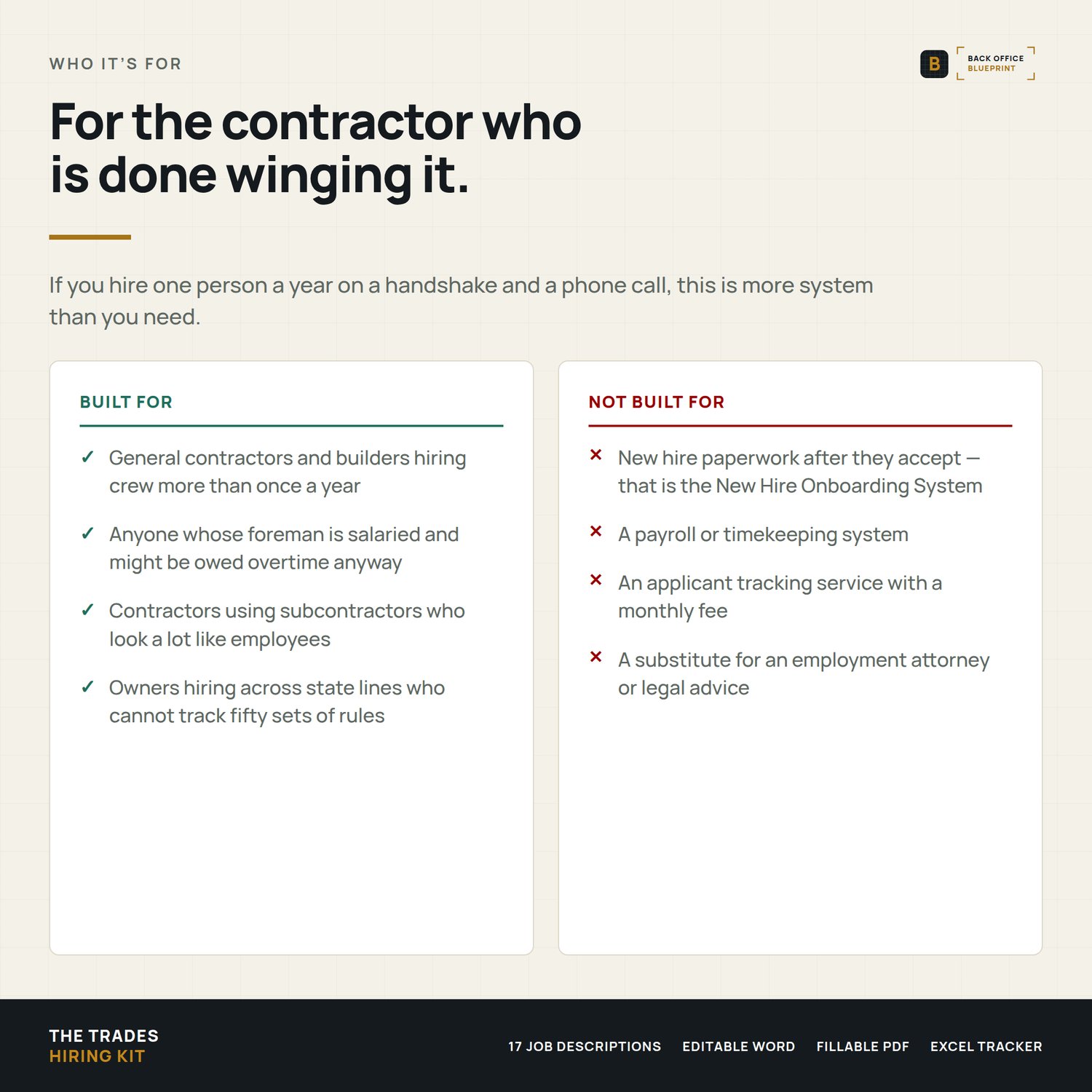
Who it's for
You run a crew of 3 to 25 and you hire more than once a year.
Not for you if you have an HR manager or a PEO writing your job posts.
What you get
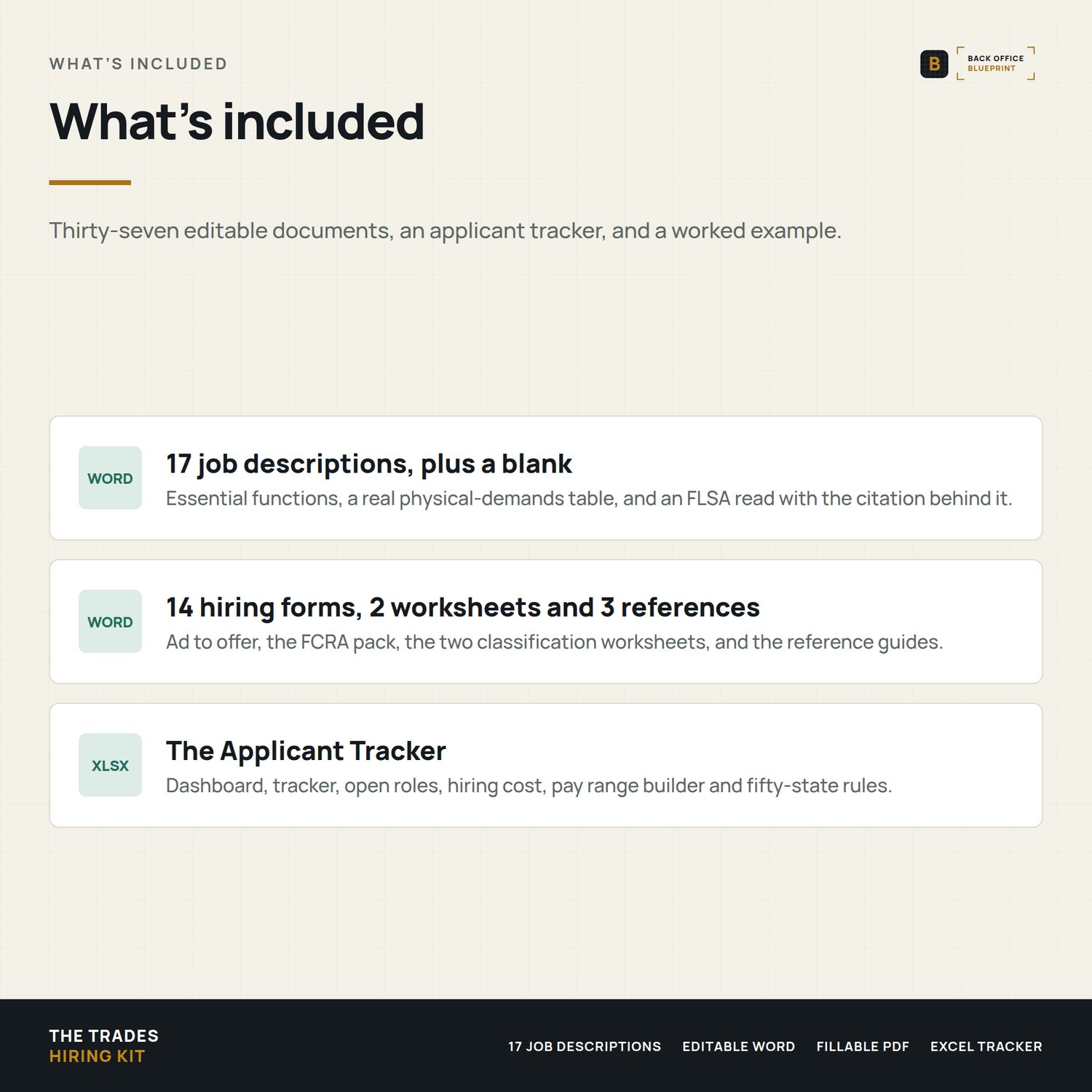
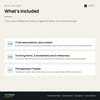
Seventeen construction job descriptions, plus a blank template. Laborer, Carpenter, Foreman, Superintendent, Heavy Equipment Operator, Electrician, Plumber, HVAC Technician, Roofer, Concrete Finisher, Estimator, Project Manager, Office Administrator, Bookkeeper, Apprentice, Helper and Driver. Each one carries essential functions written in ADA terms, a real physical-demands table (the weight, the frequency, the working height, the temperature range), required licenses, and an overtime classification read with the regulation cited behind it.
- Two classification worksheets, the questions that cost the most. Is this role exempt from overtime? Is this worker an employee or an independent contractor? Both walk the actual tests, both cite the rules, and both end with a risk tier and a line for your attorney. Never a verdict, because the same job title comes out differently at two companies.
- Fourteen hiring forms. Job ad and posting template, employment application, phone screen script and scorecard, structured interview guide and scorecard, working interview and skills assessment, reference check form, conditional offer letter, the four-part background check pack, candidate comparison matrix, hiring decision and approval form, and a non-selection letter.
- Three reference documents. What you can and cannot ask, question by question. How to set a pay range you can defend, with the government occupation codes for every role already looked up. What changes next in hiring law, dated.
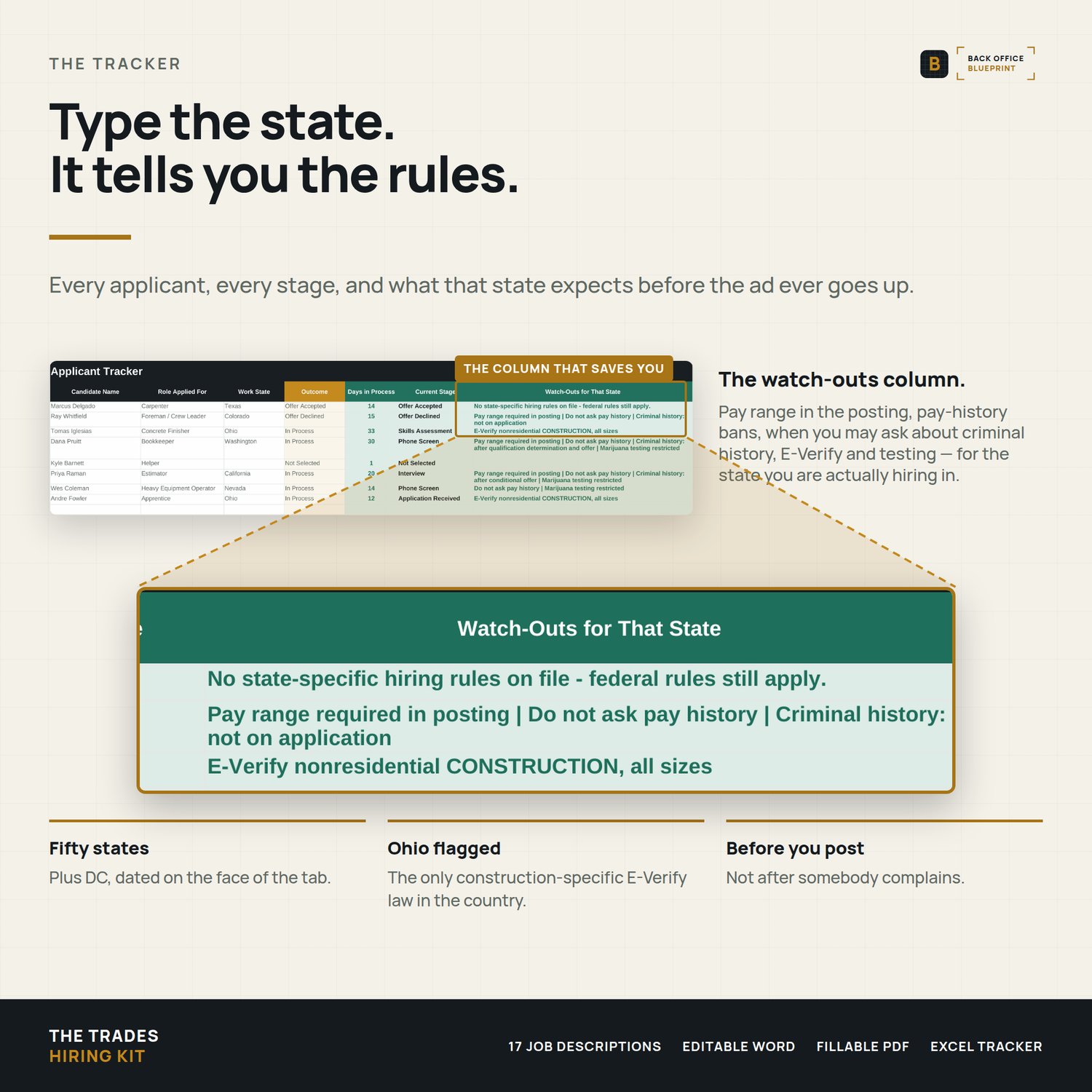
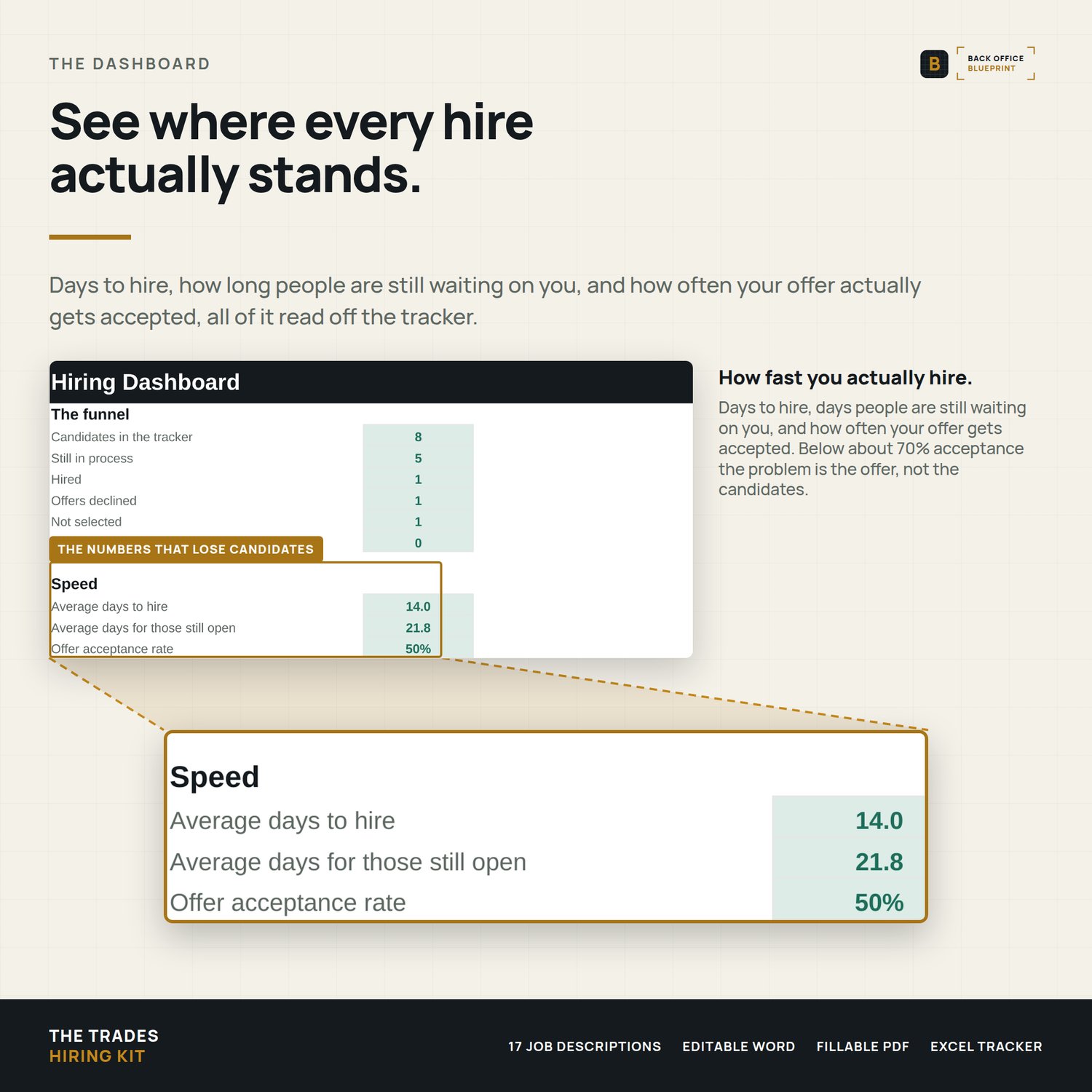
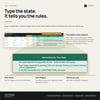
- The Applicant Tracker (Excel), a Start Here tab and six working tabs. Dashboard, applicant tracker, open roles, hiring cost, pay range builder, and a fifty-state rules reference. Type the work state and the tracker tells you what that state expects before the ad goes up.
- Eleven fillable PDFs with real form fields, built for the free Adobe Acrobat Reader. Worked examples: four of the forms filled in for a sample contractor, plus a filled DEMO tracker. And an illustrated, thirteen-page User Guide.
Why this one
Most templates are generic HR. This one is construction. The physical demands are real weights at real frequencies, the roles are the ones you actually hire, and the classification reads are written for a trade, not an office.
The rules are cited, not asserted. Every legal statement was checked against the Code of Federal Regulations, Department of Labor guidance and state statutes. Where the law is genuinely unsettled (superintendents, project managers, estimators), the documents say so rather than guessing.
It tells you what your state expects. From 1 October 2026, fourteen states and Washington, DC require a pay range in the job posting itself. Twenty jurisdictions ban asking about pay history. Fifteen states restrict when you may ask about criminal history. Ohio requires E-Verify for every nonresidential construction contractor, with no employee minimum. The tracker flags all of it by state.
How it works
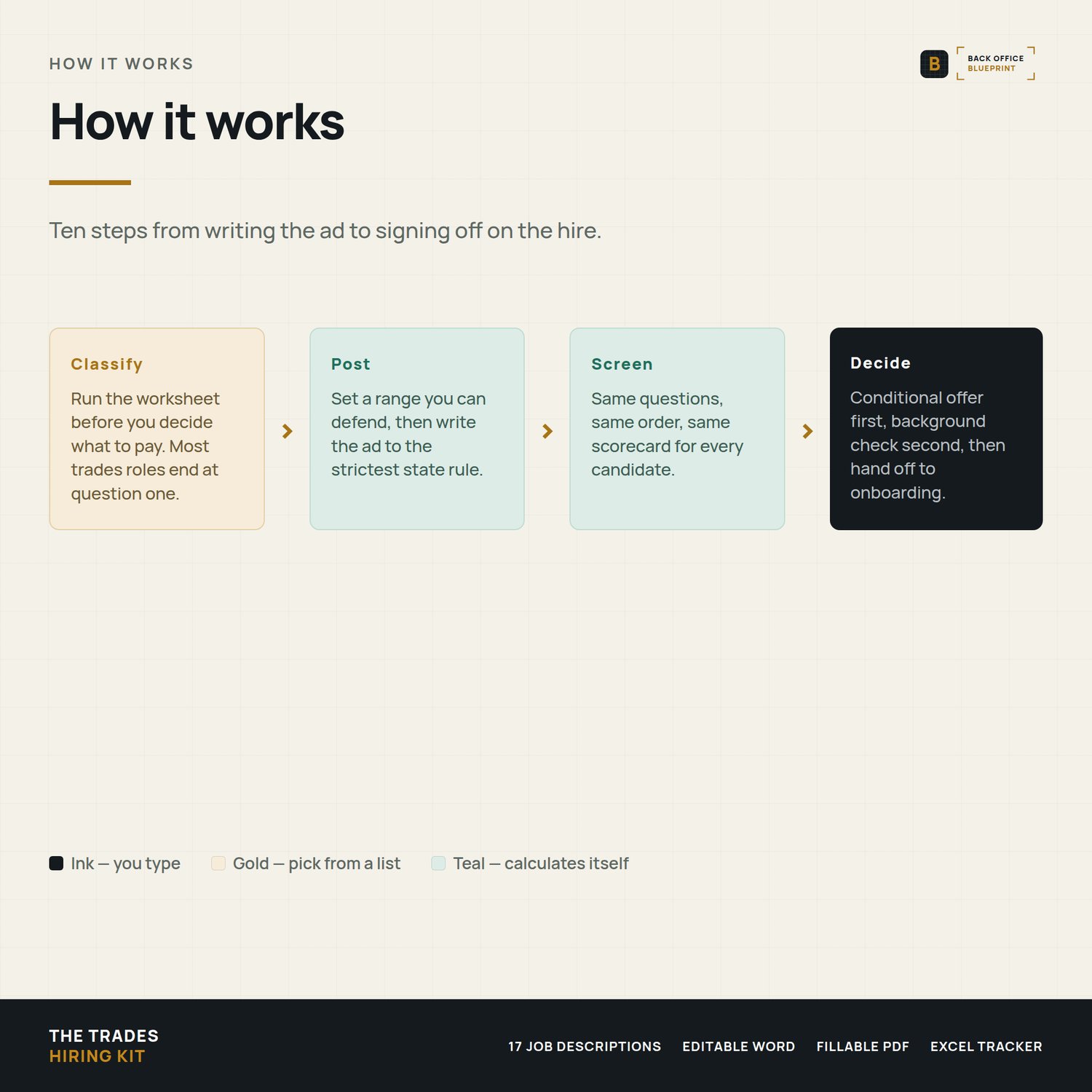
- Open the job description and adjust it to how the role actually works for you.
- Run the classification worksheet before you decide what to pay.
- Set a pay range, check your state's rules, and post the ad.
- Screen, interview and assess with the same scorecards for every candidate.
- Conditional offer first, background check second, then hand off to onboarding.
Honest about what this is
These are professionally drafted templates, not legal advice, and they do not replace an employment attorney. Buying them does not make you compliant. What makes you compliant is doing the work correctly and keeping the records.
Employment law varies by state and city and changes constantly. Everything here was verified against primary sources, and the state reference is dated on its face (August 2026). A watch list of what changes next is included, so you can see which rules are about to move.
Instant download
Editable Word documents, fillable PDFs, and one Excel workbook. Excel is the reference version. Every formula uses functions Google Sheets also supports, but the workbook has not been tested in Google Sheets, Excel for Mac or Apple Numbers, so formatting and drop-downs can shift there. No software to install, no subscription.
Built by a construction CFO who runs the back office for real contracting companies, not templates scraped together from a search. Questions before you buy? Email hello@getbackofficeblueprint.com and we answer personally.
Need the paperwork after they say yes? The Trades Hiring Kit and the New Hire Onboarding System are also sold together as the Hire & Onboard Bundle, $65 for both.